Megaquakes, Mudslides and ‘Bio-snot’: ANZIC Expeditioners investigate the Japan Trench
Giant underwater avalanches that ‘ignite’, prehistoric mega earthquakes, and a curious substance nicknamed ‘bio-snot’, are among the mysteries that ANZIC-supported scientists will investigate on IODP3 Expedition 503: Hadal Trench Tsunamigenic Slip History.
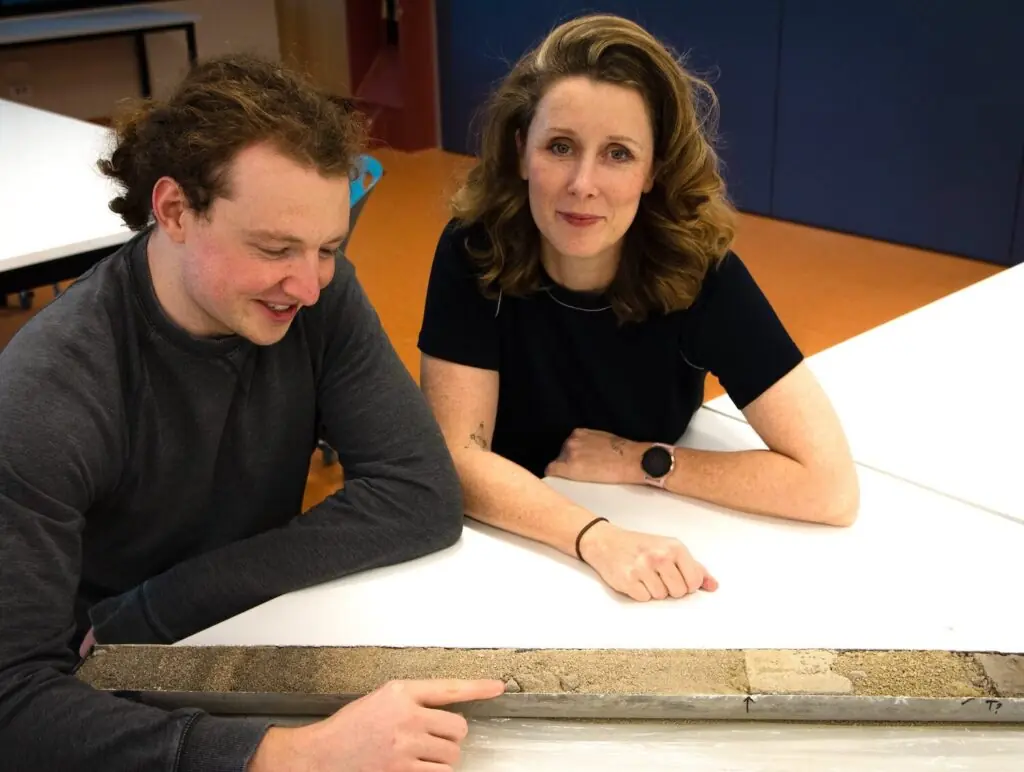
Sedimentologist Associate Professor Lorna Strachan and PhD student Anthony Shorrock, both from the University of Auckland, will sail as members of the science party on the International Ocean Drilling Programme (IODP3) Expedition in November.
Talking to Lorna and Anthony, it is clear what drives their work: a profound sense of wonder, a keen curiosity, and the joy and satisfaction of weaving together a deep understanding of the workings of the Earth.
Aboard the deep-sea drilling ship Chikyu, they’ll drill into the seafloor of the Japan Trench to extract samples from one of the world’s deepest environments, eight kilometres under water.
The goal? To uncover buried signs of past mega earthquakes and tsunamis in a region highly prone to them.
Prehistoric earthquakes and underwater avalanches
“There’s underwater evidence of massive events,” says Anthony with awe, “landslides that move literally tonnes of material. Earthquakes can trigger these submarine avalanches and they can be incredibly destructive, damaging infrastructure like undersea cables or even generating devastating tsunamis.”
“The details of how that happens, and under what conditions – that’s a fascinating puzzle,” he says.
According to Lorna, it’s a violent and dynamic process. Gesturing animatedly, she explains:
“When an underwater avalanche is triggered, it can take on a life of its own. The slipping mud and sediment sucks water into a turbulent, roiling front. At a certain point it ‘ignites’, creating a shockwave, like an explosion.”
Underwater avalanche! Experiments in a long tank called a flume allow Lorna to study the dynamics of turbidity currents (sediment avalanches) in detail.
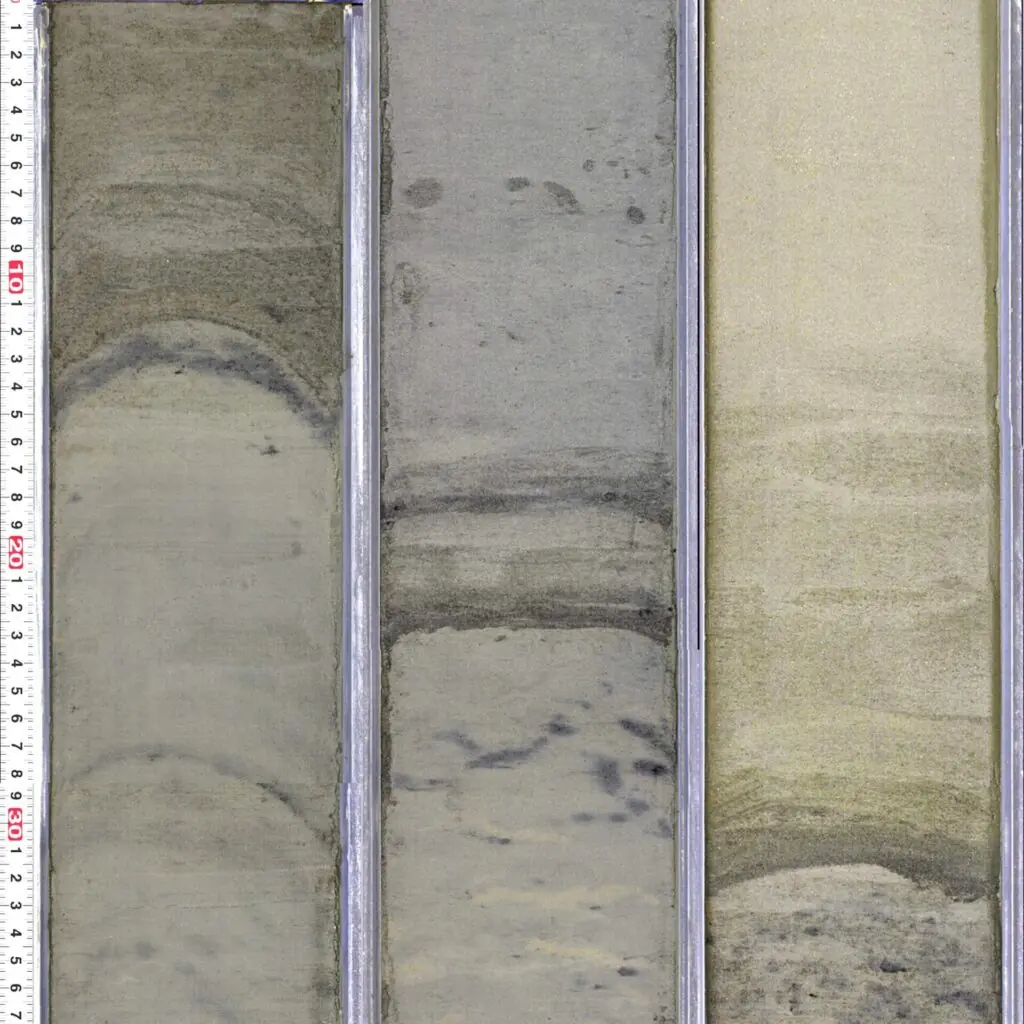
Core samples with 'Turbidites': Bands in the geological record marking dramatic avalanche events of the past.
Eventually, the cascading material comes to rest at the bottom of the deep ocean trench, where a deep layer of material marking the dramatic event is preserved in the geological record.
This expedition will drill deeper into these layers than ever before, extracting core samples to study. A previous mission (Expedition 386) reached down 40 metres, revealing records stretching back about 20,000 years. Expedition 503 aims to go deeper still – both physically and historically – to build a more complete record of the size and frequency of past earthquakes.
“How often we can expect megathrust earthquakes is of obvious interest to anyone living near a fault zone – like the subduction zone east of New Zealand,” says Anthony.
‘Bio-snot’ and a natural blender
These dramatic undersea events also reshape deep-sea ecosystems.
“These explosive turbulent flows suck in a lot of biological material – organisms living on the sea floor or those which have died and sunk along with surficial sediments,” explains Lorna. “It’s like a blender for all these nutrients.”
“When everything settles, it’s a hot spot for life.”
And not just the creatures of the deep, dark seabed. Life also exists within the buried sediment itself.
“I’m particularly interested in a type of biological material referred to as ‘bio-snot’,” says Lorna, grinning.
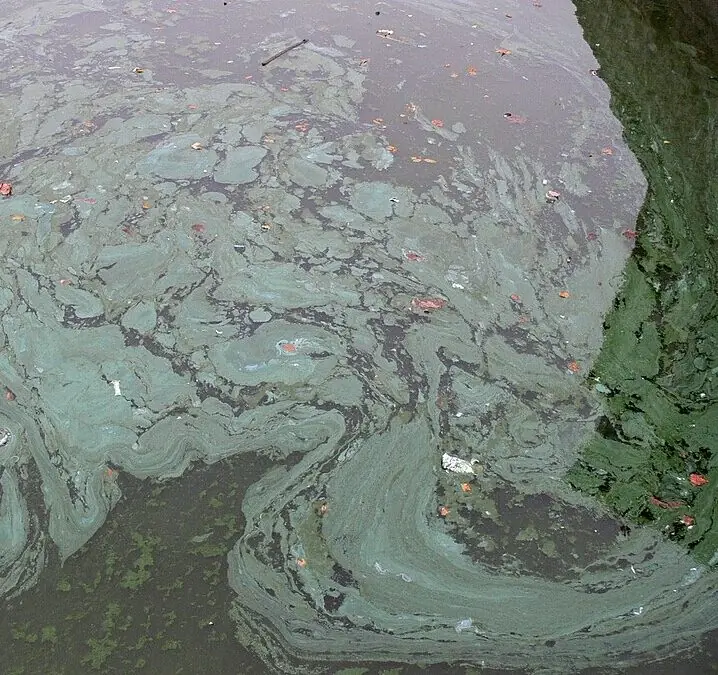
The technical term is EPS – extracellular polymeric substance – a gooey material secreted by microbes, forming biofilms, for example.
“EPS can make up to 40% of the Carbon buried in these marine sediments. It can coat each grain of mud or sand and might even act as a lubricant, changing the behaviour of the flow,” says Lorna.
Biofilm on a waterway - an example of EPS.
Credit: Lamiot, wikipedia commons
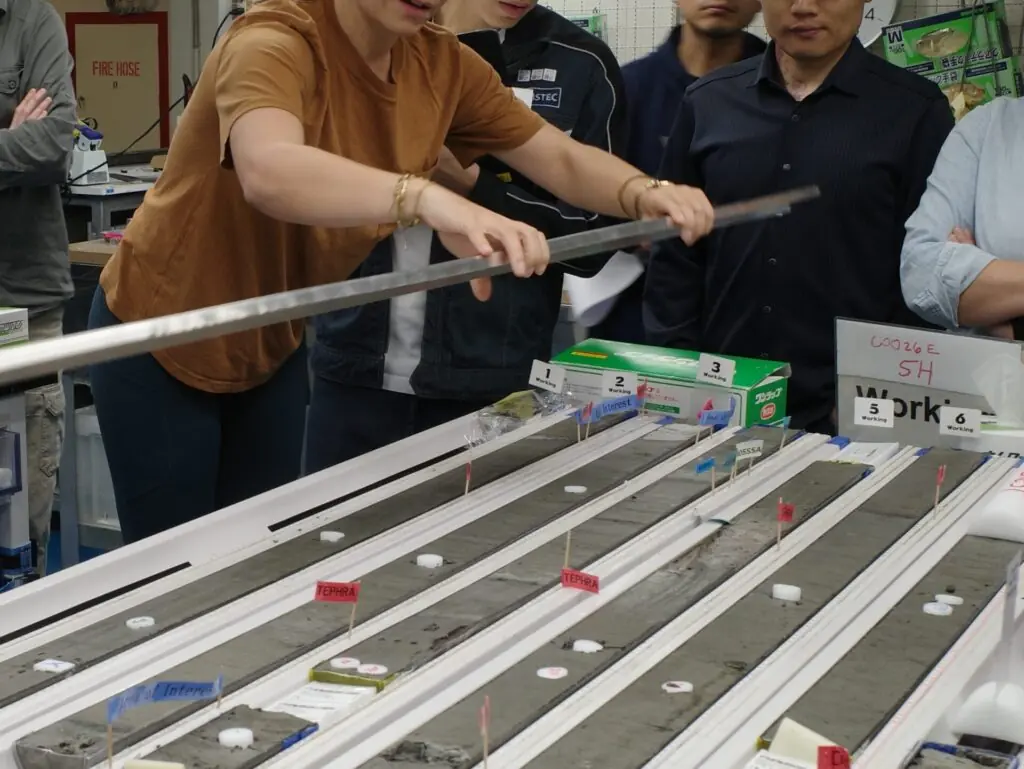
Photo Credit: JAMSTEC
Working to analyse cores from the Japan Trench on Chikyu.
Weaving understanding
It’s these unique signatures – chemical, physical, and biological – that Lorna and Anthony will be helping to detect and decode, alongside an international team of researchers.
“We’ll be reading the stories coded in the core samples we retrieve,” says Lorna. “First we examine the layers – what do they look like? Then we use tools like computerised tomography (CT) scanners to peer inside. Eventually we get to dig in – literally – to analyse what’s there.”
For Anthony, it’s the chance to experience his science in a new way.
“I’ve spent years working on this data,” he says. “Now I get to be part of collecting it. It’s exciting to contribute to such a major international collaboration, and to gather material for the next wave of PhDs to study!”