From global cycles to microscopic bubbles, and the sounds of science at sea: ANZIC experts on Expedition 502
Impact of Petit-Spot Magmatism on Subduction Zone Seismicity and Global Geochemical Cycles
IODP3 Expedition 502 is preparing to sail and four excited ANZIC expeditioners are contributing!
“I’m so over the moon to be going,” says Dr Louisa Stokes, a Research Associate from Curtin University, with obvious glee. “There’s such a great science team for this expedition and I will learn so much. It’s an honour to be among them.
Louisa will be joined on the science team by IODP veteran, Professor Andrew Roberts (Australian National University) and Mila Huebsch (PhD candidate, University of Auckland). ANZIC will also support Science Communicator, Sarah Barnes (Australian National University).
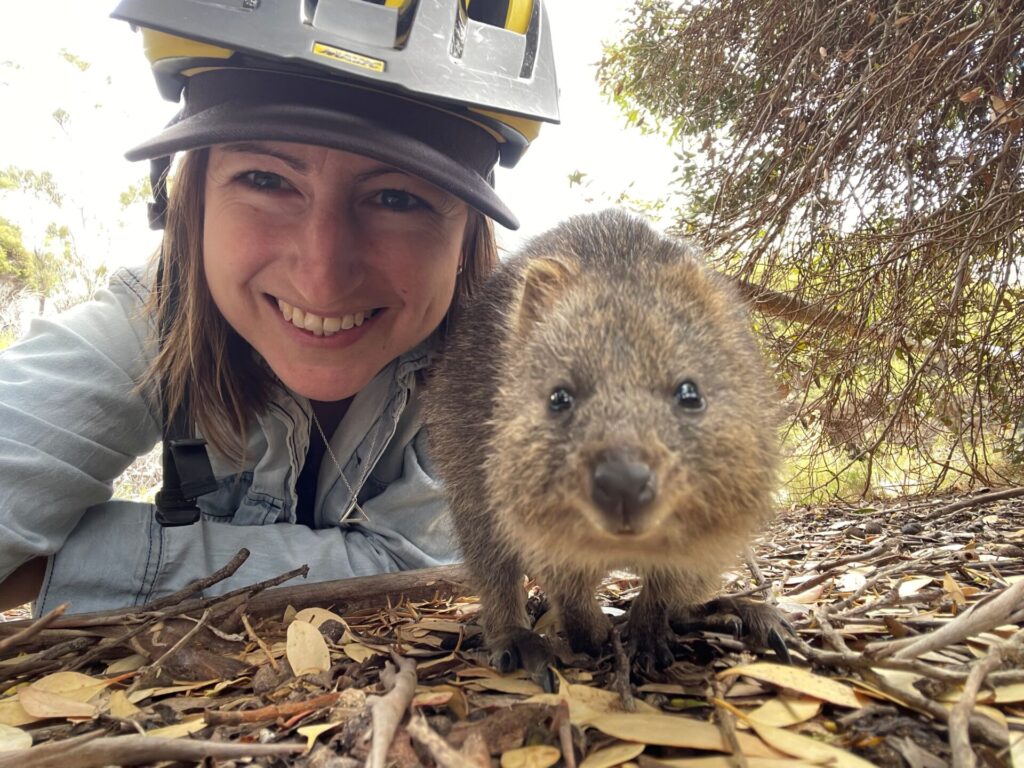
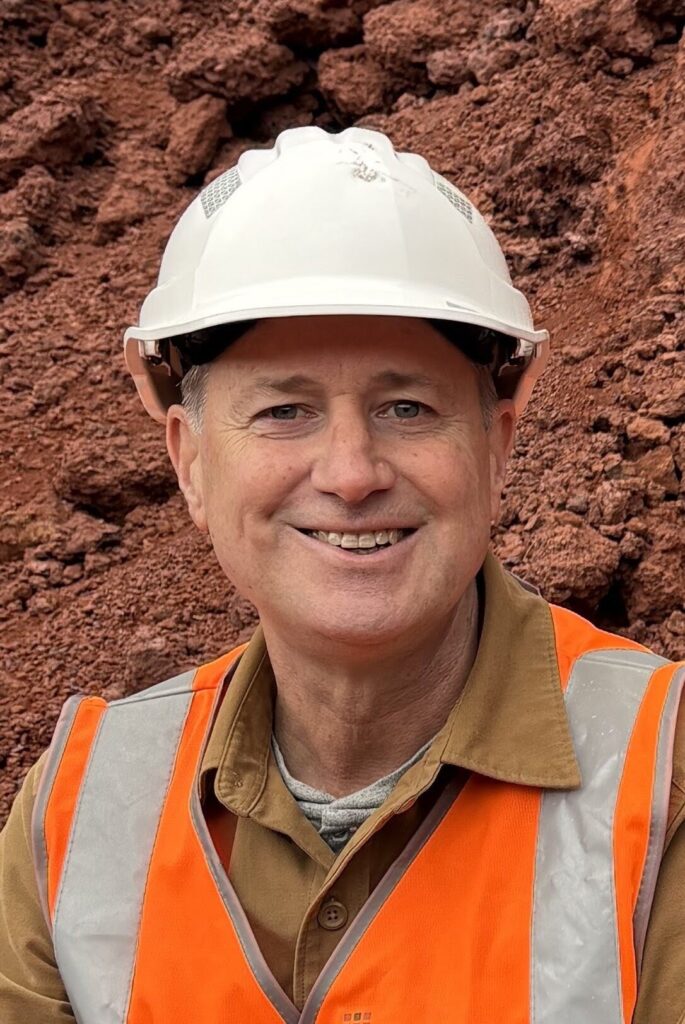
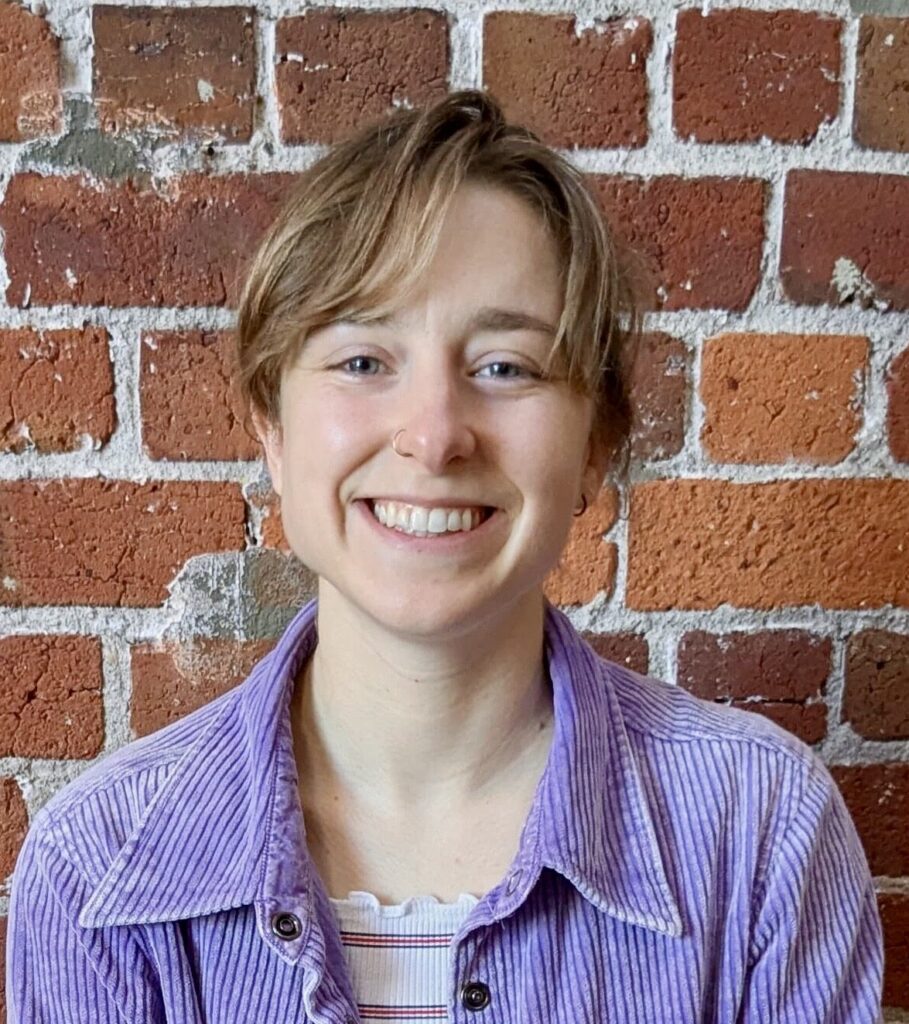
Left: Prof Andrew Roberts will lead the shipboard paleomagnetism efforts
Tiny volcanoes
The expedition, to the outer rise of the Japan Trench, will drill seafloor sediments and the underlying basement in search of clues about petit-spot volcanism and its influence on megathrust earthquakes and Earth’s geochemical cycles.
Petit-spot magmatism is a unique type of volcanic activity, occurring in small, isolated volcanic cones that form where a tectonic plate flexes and fractures just before it subducts beneath another plate – like off the coast of Japan.
This activity creates clusters of tiny basalt volcanoes only a few kilometers wide and less than 300 metres high. Because subduction zones lie deep below our ocean, petit-spot magmatism is not well studied.
“Petit-spot magmatism is very inaccessible. This is a rare chance to examine it closely,” says Louisa.
“It will be really exciting to drill into the ocean sediments and these small volcanic intrusions to study how the crust evolves and what materials are being carried into the mantle via this subduction zone.”
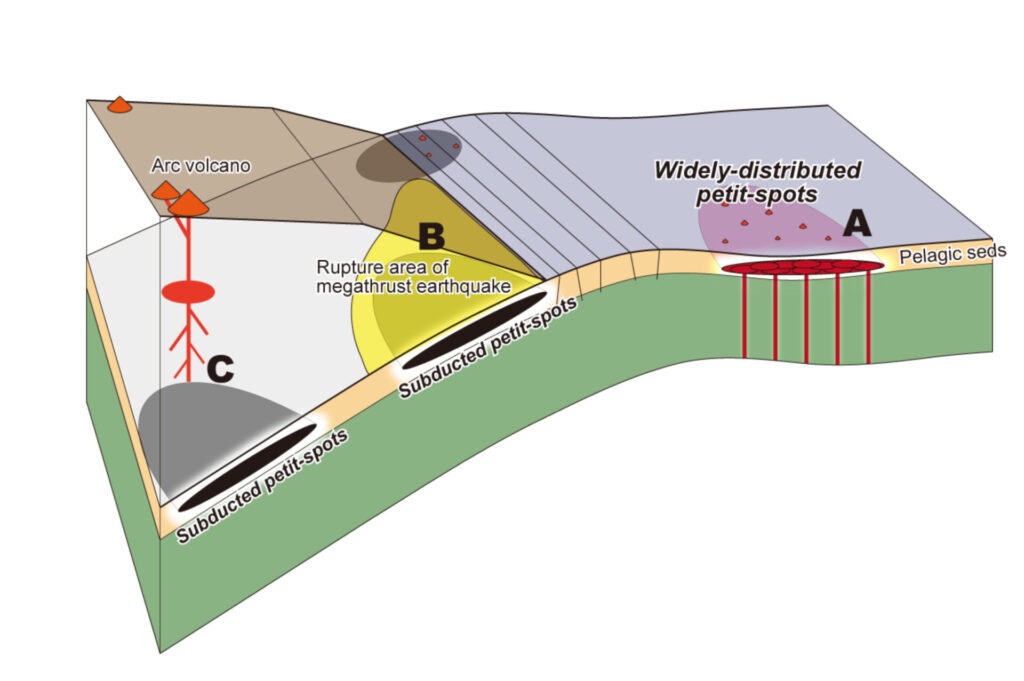
Illustration of the production of petit-spots on the subjecting plate, and their relationship to subduction megathrust earthquakes (B), and global geochemical cycles (C).
From Expedition 502 Prospectus
Global cycles
“We don’t know how widespread petit-spot magmatism is,” she adds “There are hints here that it could be more widespread than we thought. That’s important because the basaltic rocks are high in CO2 and that has implications for the deep carbon cycle, and the atmospheric evolution of our planet.”
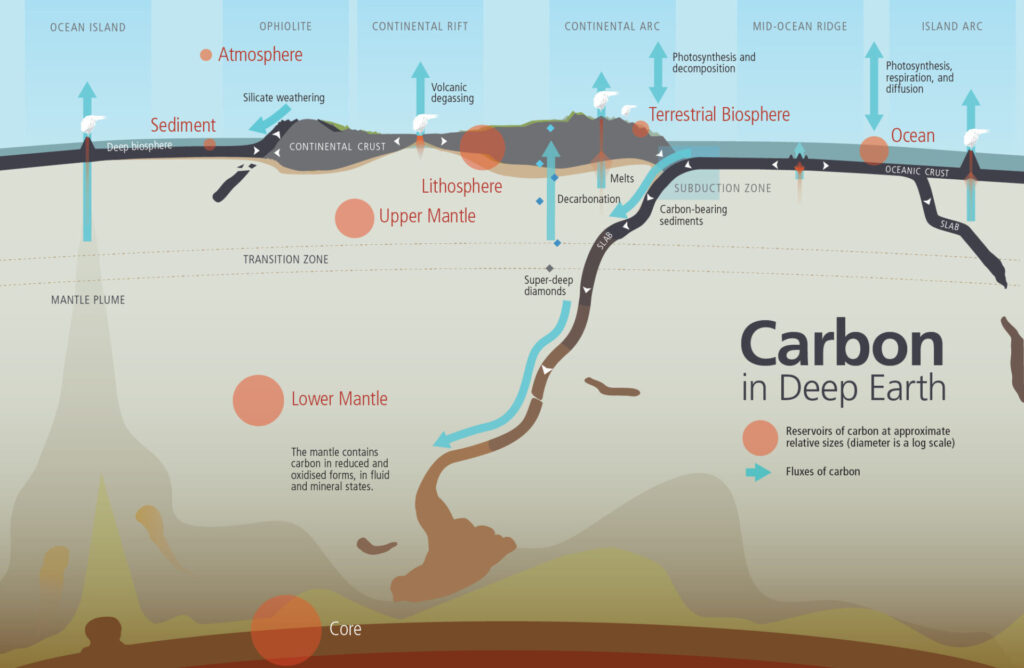
The deep carbon cycle. Image from Wikimedia Commons by Mice of Mu
The deep carbon cycle is the long-term geological process that moves carbon from Earth’s crust into its mantle and core, and back to the surface and into the atmosphere.
Prior to her PhD, Louisa worked in the mining industry and has extensive experience with drilling operations.
From the lab
Mila Huebsch will be watching intensely from the lab. As an offshore participant in the expedition, Mila can’t wait to get her hands on the samples collected on board.
“It blows my mind that we are able to drill cores beneath the deep ocean and that, shortly after, five-centimeter cubes sampled on board the Chikyu will end up on my desk!” she says. “These samples will show us a hidden part of the Earth we can’t usually put eyes on.”
Microscopic textures and bubbles
Mila has a detailed plan for when she does get to see them. She’ll look in microscopic detail at the rocks formed during these small under-sea volcanic events which happened millions of years ago.
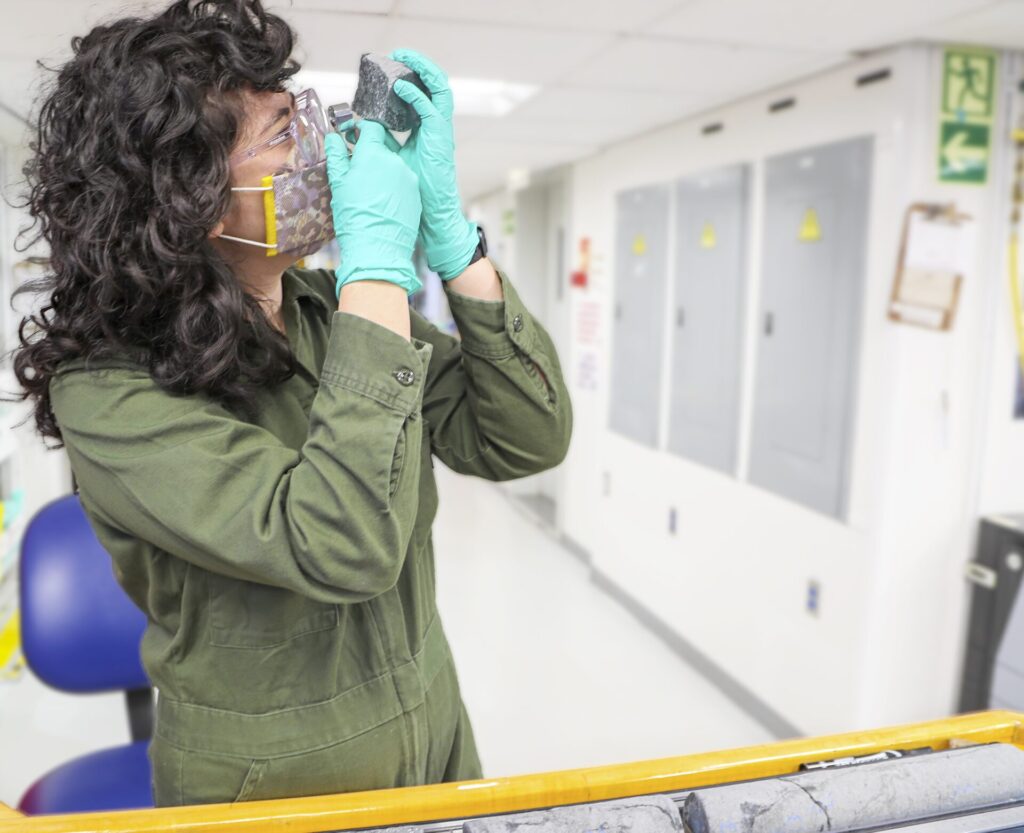
Observing the vesicles in the basalt with a hand lens during IODP Expedition 395C. Credit: Sarah Kachovich, IODP JRSO
“I’ll perform micro-scale geochemical and textural analysis, to help improve our understanding of how volatiles were transported and released by petit-spot eruptions. To do this, I’ll make thin sections and analyse them with various types of microscopy, including FTIR (Fourier-transform infrared spectroscopy). I hope to also utilise the impressive micro-computed tomography beamline at the Australian synchrotron to look at bubble and crystal textures inside the samples.”
“It’s the intersection of geology with marine and climate science,” she enthuses. “The details held in the rocks will tell us about outgassing during these ancient eruptions, as CO2 and other gases were released into the sea.”
Sounds like science at sea!
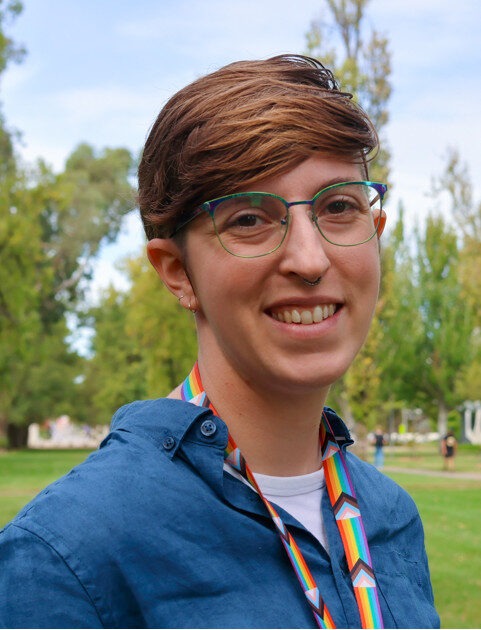
With a background in marine science, Sarah Barnes can’t wait to head offshore. She’s a PhD candidate with the Australian National Centre for the Public Awareness of Science, and one of four outreach officers joining the expedition.
Her project? Capturing the evocative sounds of science at sea.
“I’ll be capturing environmental audio, any of the sounds on the ship – science equipment, sounds of equipment and movement in the lab, and even the sounds of daily life on board. There are a lot of really unique sounds when you’re at sea. Together they become your whole soundscape.”
“I’ll be working with an audio engineer Claire Wade to turn these environmental recordings into audio stories of ocean drilling, for example, the journey of a core, or the workings of the lab.”
Some of these recordings will even find their way into Claire’s ‘lo-fi beats’ – a style of chilled electronic music with a relaxed, atmospheric tone.
“Mixing sounds from the drilling program into the music may spark curiosity, and we’ll give people a way to learn more,” Sarah explains.
“I’m a little nervous about getting the quality recordings that Claire will need,” she admits, “but living in Canberra, I miss the ocean – so I can’t wait to be back at sea.”
Learn more:
- Expedition 502 Scientific prospectus
- Expedition website!