
Ancient pollen: ANZIC student prize
We’re thrilled to announce the winner of the 2026 ANZIC Prize for Best Student Publication – our annual spotlight on outstanding student research in scientific drilling.
This year’s deserving winner is Laura McDonald (University of Auckland), for her exciting paper Pollen transport to deep-marine environments: Considerations for reconstructing past vegetation from marine sediment cores.
As part of her PhD, Laura examined pollen preserved in deep-sea sediments spanning the last 1.6 million years to construct a vegetation record for the east coast of Aotearoa-New Zealand.
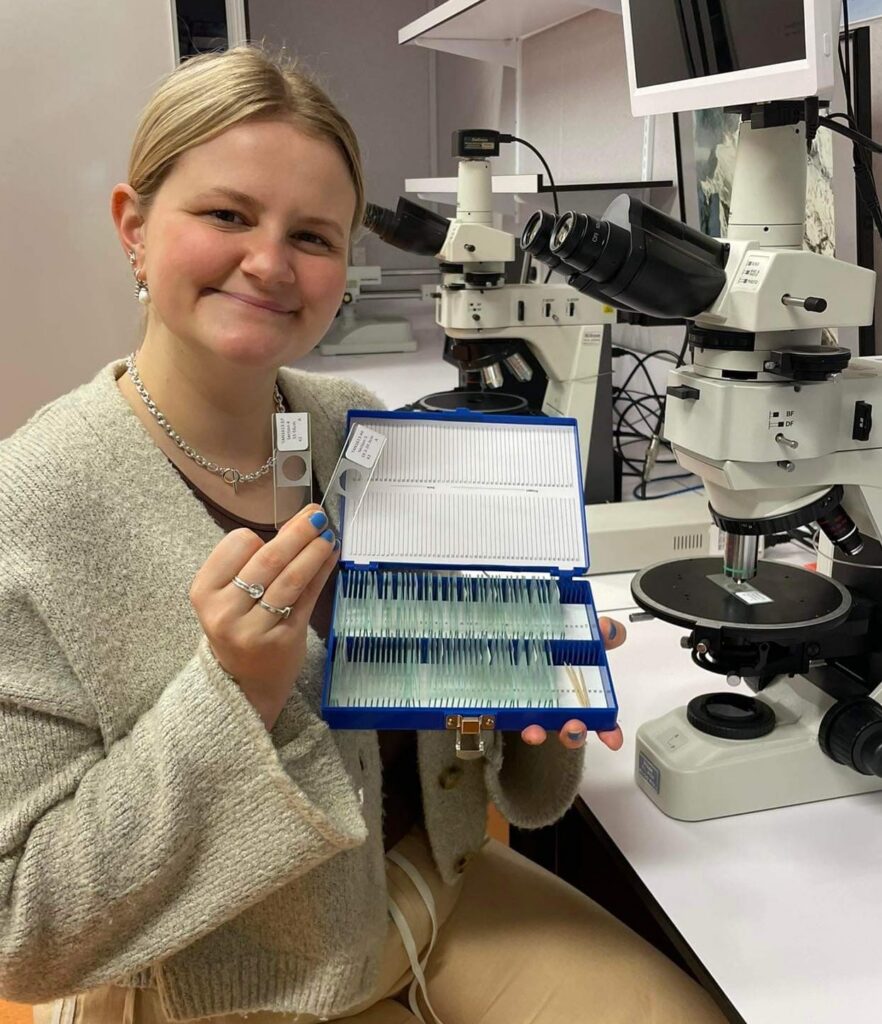
“I was amazed just how much exceptionally well preserved pollen I was seeing in samples from over three kilometres below the sea surface, and in turbidites no less!”
She found that – despite being dominated by turbidites – a core from the Hikurangi Subduction Margin produced a strikingly similar vegetation record over the last two glacial-interglacial cycles (~135 ka) to records from nearby hemipelagic and pelagic cores
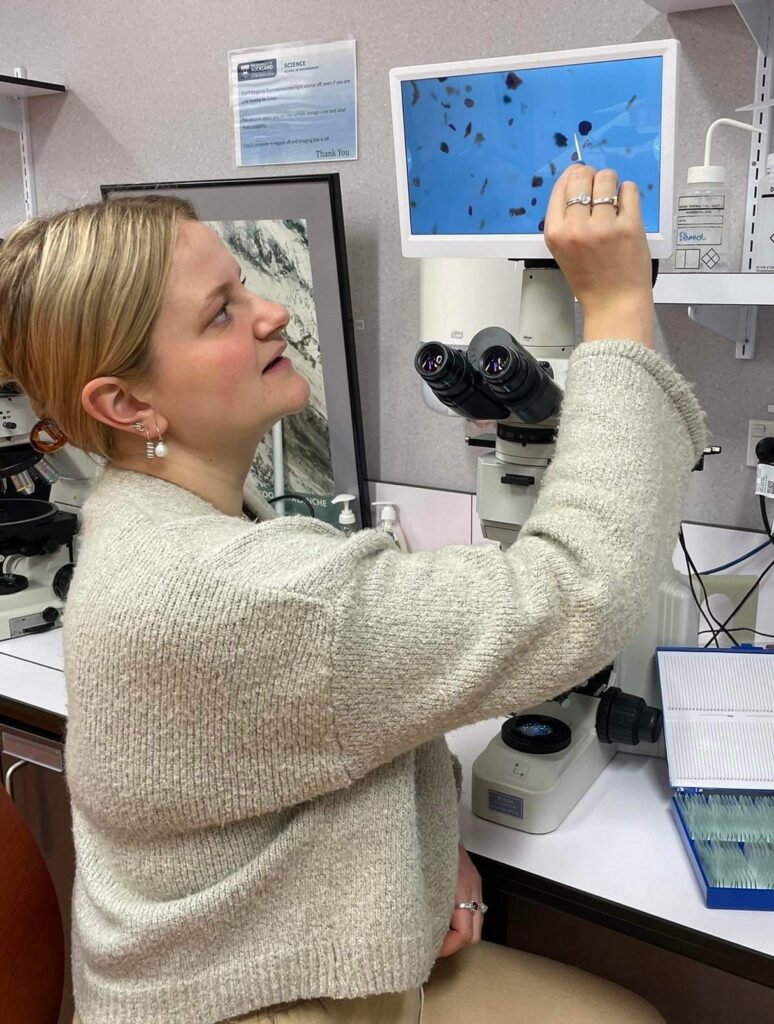
“I think it is incredible that such tiny, ancient grains of pollen can tell us so much about past climate. They sit, sometimes for millions of years, preserved in deep ocean sediments, waiting for someone to look at them under the microscope and uncover their story. I love that I get to be that person, using these tiny fossils to reconstruct Aotearoa’s past climate. I genuinely enjoy my work, and it always makes my day when I see some of my favourite pollen taxa appear under the microscope.
Her demonstration that turbidite-rich cores from active continental margins can reliably capture past vegetation and climate signals opens up vast new opportunities to use ocean sediment archives from around the world.
ANZIC’s Science Committee was equally impressed by Laura’s commitment to sharing her work, from engaging fellow academics to inspiring local school children and online audiences (enjoy a video walk-through of her research).
“Outreach and sharing my research with the public really helped me step back and see the bigger picture. Visiting schools and talking to children was particularly rewarding – I did not know this kind of career was even an option when I was younger, so it is really special to be able to share it with students now.”
To celebrate the prize, Laura has been invited to present her work at an ANZIC gathering this year, where she will also receive her commemorative trophy..
“I am absolutely stoked. Winning the award is a great feeling, and I am really looking forward to presenting my research at the next ANZIC meeting.”
Congratulations Laura!
Your work is a powerful reminder that the stories locked in ocean sediments can help us better understand our planet’s past and navigate its future.
Heartfelt thanks to the Engage Subcommittee of the ANZIC Science Committee for running this initiative to fuel the next generation of scientific innovators!