16 Research Institutions, One mission:
Deep Earth Discovery.
Sixteen Australian and New Zealand universities and research institutions have renewed a powerful alliance to keep our scientists at the cutting edge of global Earth science.
Through the Australian New Zealand International Scientific Drilling Consortium (ANZIC), they gain access to billion-dollar drilling vessels and large-scale research projects operated by international partners to retrieve core samples from up to three kilometres below the ground or seafloor.
These samples of sediment, rock, fluids and microbes, underpin research into climate change, geohazards like earthquakes and tsunamis, ocean circulation, coastal ecosystems and the evolution of life – critical understanding for a resilient and sustainable society.
The Australia partners re-signed with the consortium last month.
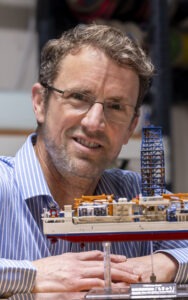
“These samples from deep within the Earth are crucial for answering important questions, but the highly specialised infrastructure needed to access the samples is well beyond Australia’s or New Zealand’s reach if we act alone,” says Dr Ron Hackney, ANZIC Director. “By uniting under this agreement, we’re ensuring our scientists remain at the forefront of global discovery.”
“Over the past decade, more than 70 ANZIC-supported scientists have taken part in varied international scientific expeditions, for example, sampling sediments to understand global weather cycles (El Niño/ La Niña), probing fossil coral reefs to map their resilience to sea level rise, and probing fault zones to understand earthquakes, tsunamis and the shaping of the continents.”
“Most recently Australian-based scientists have studied offshore ground-water systems which could be important in a hotter, dryer future.”
“And there are future projects planned to investigate the fragility of Antarctic ice sheets, and to drill down to investigate the birth and growth of Pacific volcanoes.”
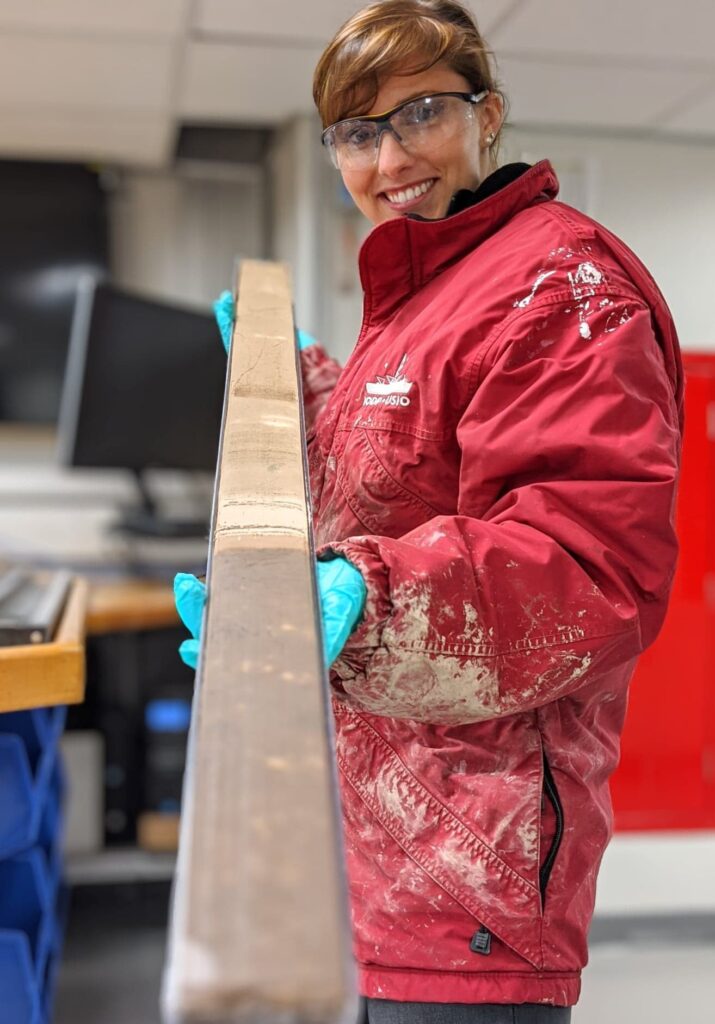
“ANZIC membership is like a passport to discovery on a global scale. With this new agreement in place, the next generation of scientists will continue to tackle the big questions about our planet’s past, present, and future.”
In Australia, ANZIC is enabled by AuScope, within the Australian Government’s National Collaborative Research Infrastructure Strategy (NCRIS). In New Zealand, GeoDiscoveryNZ facilitates participation, funded by the NZ Ministry of Business, Innovation & Employment.
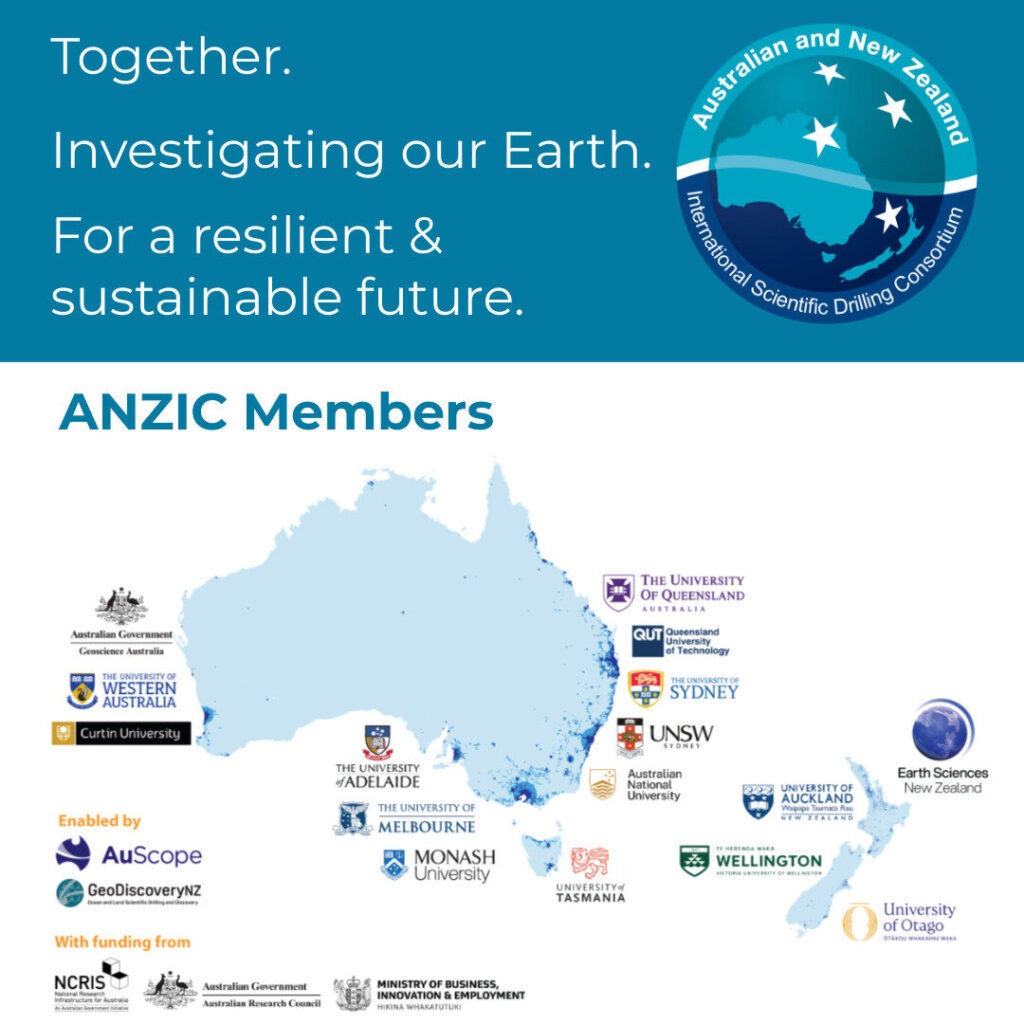
ANZIC’s re-newed member institutions are:
Australian National University
Curtin University
Earth Sciences New Zealand
Geoscience Australia
Monash University
Queensland University of Technology
University of Adelaide
University of Auckland
University of Melbourne
University of NSW
University of Otago
University of Queensland
University of Sydney
University of Tasmania
University of Western Australia
Victoria University of Wellington